
What’s the Difference Between an Interior Design Consultation and Full-Service Design?
If you’re planning a remodel or furnishing your home, you may know you need professional design help—but you might not know how much help you actually need.
Do you just need an interior designer to come to your home, answer questions, help you make a few decisions, and point you in the right direction?
Or do you need someone to actually design the project, make selections, create drawings, coordinate details, and guide the project from beginning to end?
That’s essentially the difference between an interior design consultation and full-service interior design.
Both can be incredibly valuable. They’re simply designed for very different situations.
What Is an Interior Design Consultation?
An interior design consultation is typically a focused meeting with a designer where you can get professional guidance about your home or project.
Think of it as concentrated access to a designer’s experience.
During a consultation, you might discuss:
Floor plan or furniture layout ideas
Paint colors
Flooring
Cabinet colors or styles
Countertops
Lighting
Plumbing fixtures
Furniture placement
Remodel ideas
Where to invest your budget
What changes will make the biggest impact
Problems you’re having with a room
Questions about a contractor’s recommendations
At Lake Hazel Design, our consultations are designed to give homeowners professional direction before they make expensive decisions.
A consultation can be especially useful at the beginning of a remodel when you’re trying to determine what is possible and where to start.
What Does a Consultation Usually NOT Include?
This is where homeowners sometimes get confused.
A consultation is generally professional advice and direction, not the complete design of the project.
For example, during a consultation your designer might recommend relocating a fireplace, changing the cabinet configuration, using a warmer flooring material, or selecting a particular direction for the kitchen.
But turning those ideas into a complete design can require considerably more work after the meeting.
Depending on the project, that could include:
Detailed space planning
Construction drawings
Cabinet elevations
Finish schedules
Material sourcing
Specific product selections
Furniture sourcing
Lighting plans
Renderings
Contractor coordination
Pricing and procurement
Revisions
Installation and styling
A two-hour consultation cannot realistically replace dozens of hours of design work.
That doesn’t make the consultation less valuable—it simply means the deliverable is different.
What Is Full-Service Interior Design?
Full-service interior design is much more comprehensive.
Instead of primarily giving you advice about what you could do, your designer develops the project and helps turn those ideas into an actual finished space.
Depending on the scope of the project, full-service design may include everything from the initial concept through installation.
For a remodel, that might mean your designer helps with:
Space Planning
Determining how the room should function, including walls, cabinetry, appliances, furniture, circulation, and architectural elements.
Design Development
Creating the overall look and feel of the space and making sure individual design decisions work together.
Material and Finish Selections
Selecting flooring, tile, countertops, cabinetry, hardware, plumbing, lighting, paint, and other finishes.
Drawings and Documentation
Depending on the project and designer, this can include floor plans, elevations, lighting plans, cabinetry details, finish schedules, and other documentation contractors need to execute the design.
Product Sourcing
Researching and specifying the actual products that will be used in the project—not simply recommending that you buy a “brass pendant.”
Contractor Coordination
Answering design questions, reviewing details, helping resolve conflicts, and communicating design intent throughout construction.
Furniture and Furnishings
Selecting furniture, rugs, lighting, window treatments, artwork, accessories, and other elements needed to complete the home.
Installation and Styling
Helping bring all of those decisions together into the finished space.
Consultation vs. Full-Service Design
Here’s the easiest way to think about it:
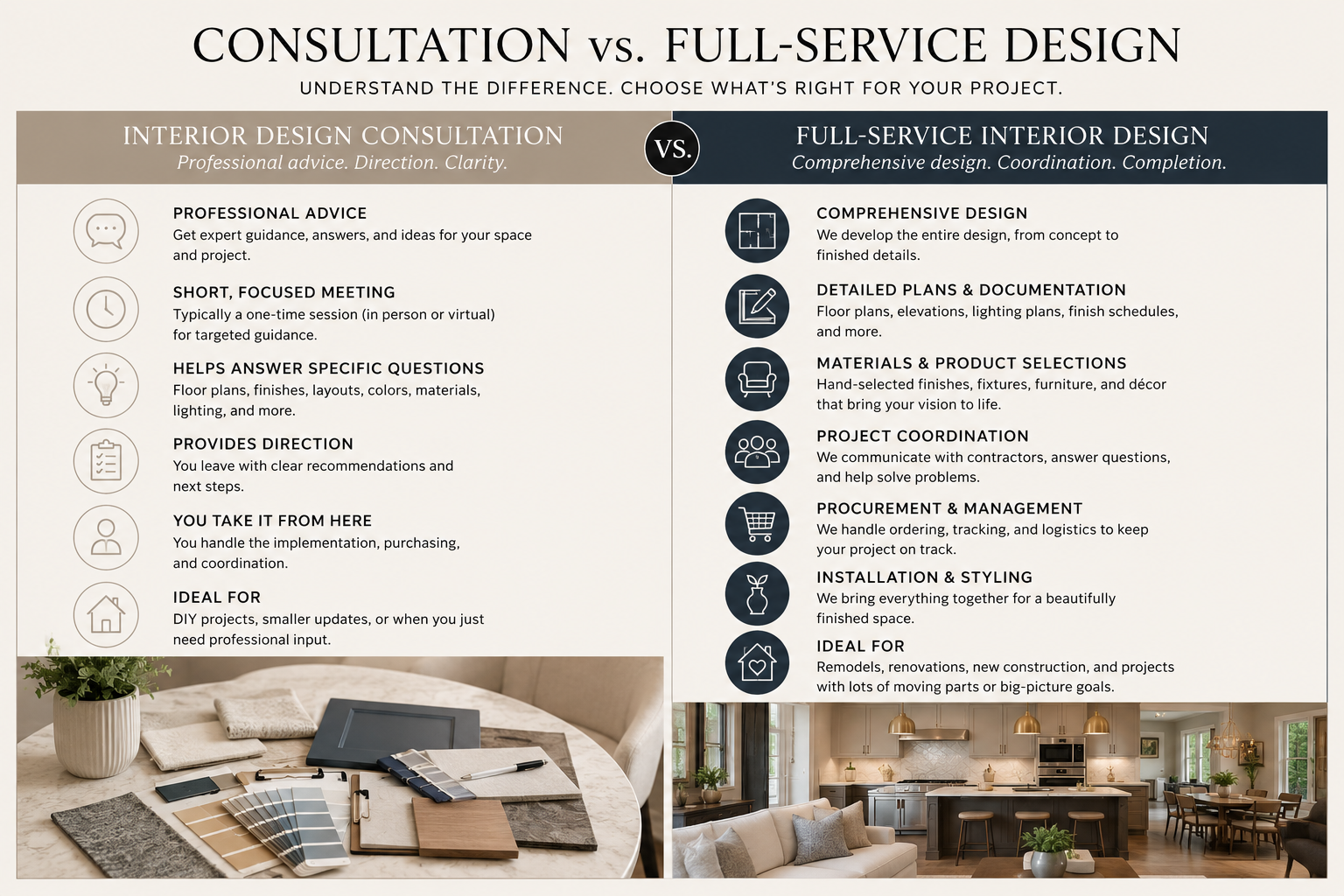
Neither option is automatically better.
The right choice depends on your project—and on how much of the process you want to manage yourself.
When Is a Design Consultation Enough?
A consultation may be perfect if you’re comfortable managing the project but need professional input.
For example, you may already have a contractor and simply need help deciding:
“Should we remove this wall?”
“What flooring works with these cabinets?”
“Which paint color should I use?”
“Does this layout make sense?”
“Which countertop would look best?”
“Where should the lighting go?”
You might also be comfortable sourcing products, communicating with contractors, tracking orders, measuring spaces, and handling problems as they arise.
In that situation, hiring a designer for targeted guidance can give you the confidence to keep moving without paying for a much larger design scope.
When Should You Consider Full-Service Design?
Full-service design becomes particularly valuable when the project involves a lot of interconnected decisions.
A kitchen remodel is a great example.
Changing the kitchen layout can affect cabinetry.
Cabinetry affects appliances.
Appliances affect electrical and plumbing.
The countertop affects the backsplash.
The backsplash affects outlets.
Lighting affects cabinetry placement.
Flooring transitions into adjoining rooms.
Suddenly, what looked like “picking pretty finishes” has turned into a rather impressive game of construction dominoes.
That coordination is a major part of professional interior design.
You may want full-service design if:
You’re completing a major remodel
You're changing floor plans
You're renovating several rooms
You need detailed finish selections
You don't have time to manage hundreds of decisions
You want help communicating with contractors
You want someone keeping the entire design cohesive
You're worried about making expensive mistakes
You want a highly customized finished result
Why Does Full-Service Interior Design Cost More?
Homeowners sometimes compare the price of a consultation with the cost of full-service design and wonder why there is such a large difference.
The answer is mostly time and responsibility.
A designer might spend two hours physically sitting with you during a consultation.
A full remodel may require dozens—or sometimes hundreds—of hours behind the scenes.
There can be research, sourcing, drawings, emails, phone calls, contractor questions, revisions, site visits, pricing, ordering, problem solving, documentation, and installation coordination.
Much of interior design happens when the homeowner isn't even in the room.
That behind-the-scenes work is what turns a collection of ideas into a project that can actually be built.
Can I Start With a Consultation and Upgrade Later?
Absolutely.
In fact, this can be one of the smartest ways to begin if you're unsure how much design assistance you need.
Start with a consultation.
Walk through the project with a designer.
Discuss your priorities, budget, concerns, and ideas.
Then determine whether you feel comfortable implementing those recommendations yourself or whether you would rather have the designer take the project further.
At Lake Hazel Design, a consultation can help us understand the project and determine what level of design involvement makes the most sense before developing a larger scope.
What Should I Ask Before Hiring an Interior Designer?
Before booking either service, ask exactly what is included.
Different designers structure their services differently.
Ask questions such as:
How long is the consultation?
What will we cover?
Will I receive anything after the meeting?
Are product selections included?
Are drawings included?
Are renderings included?
How many revisions are included?
Will you communicate with my contractor?
Are site visits included?
Is purchasing or procurement included?
What happens if I need additional help?
A clear scope protects both the homeowner and the designer.
And if you're comparing designers, don't compare pricing until you're comparing what each designer is actually providing.
Two proposals can have dramatically different prices because they include dramatically different levels of service.
Which Interior Design Service Is Right for You?
If you primarily need answers, ideas, reassurance, or professional direction, start with an interior design consultation.
If you want someone to develop the design, make detailed selections, document the project, coordinate the design, and help carry the vision through implementation, you probably need a larger design package or full-service interior design.
And there’s plenty of room between those two options.
Some homeowners need a consultation.
Some need full service.
Others need a designer involved for specific portions of the project.
The goal isn't to purchase the biggest design package possible. It’s to have the right amount of professional support for the complexity of your project and the amount of responsibility you want to take on yourself.
Need Help Figuring Out Which Level of Design Service You Need?
Lake Hazel Design works with homeowners on remodels, renovations, kitchens, bathrooms, furnishings, and other residential design projects.
If you're not sure where to begin, an interior design consultation is often the easiest first step. We can look at your space, talk through your ideas and challenges, and help determine what level of design assistance makes sense for your project.